














“Small farms and increased consumer purchases of locally-produced food products are better for the future of American agriculture and the environment.”
10/29/2013
Many consumers are nostalgic for the bucolic scenes associated with the small farms of generations past and have embraced farmers markets and other opportunities to buy their food from “local” producers. Consumers might be surprised to find that this approach may not provide the long-term benefits to agriculture or the environment as they believe.
True or Not? “Small farms and increased consumer purchases of locally-produced food products are better for the future of American agriculture and the environment.”

Jude Capper, PhD says:
Small farms and increased consumer purchases of locally-produced food products are better for the future of American agriculture and the environment.
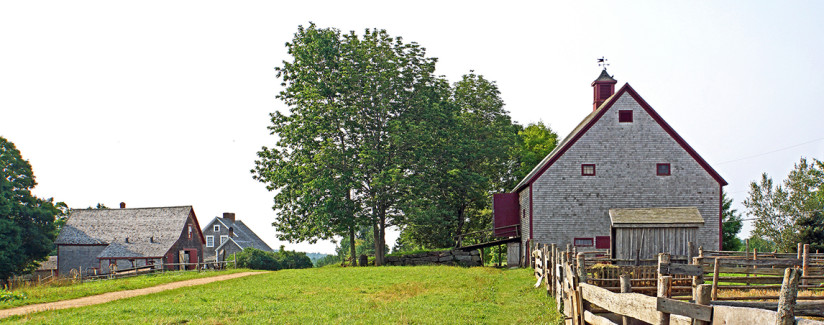
The popular agrarian vision of US livestock farming involves a small family farm with animals grazing on sunlit pasture, a farmer in bib coveralls and a gable-roofed red barn in the background. Self-proclaimed food experts and activist organizations often embrace this vision, suggesting that a return to the agricultural systems of yesteryear will provide solutions to current economic, environmental and nutritional issues ranging from the energy crisis (Pollan, 2008) to global warming (Koneswaran and Nierenberg, 2008) and obesity (Pimentel et al., 2008).
During the 20th century, average farm size increased from 146 acres to 487 acres and US farm numbers decreased from 5.7 million to 1.9 million (USDA/NASS, 2009). Small farms account for 91 percent of all farms, however, due to low productivity, these farms only account for 23% of total US agricultural production (Hoppe et al., 2010). Interestingly, in recent years the agricultural industry has seen a reduction in the number of medium-sized farms (Ahearn et al., 2005) while the numbers of large and small farms have increased. It is worth noting that despite changes in farm size, 98% of US farms are currently classified by the USDA as family farms, and these farms account for 85% of production (USDA/ERS, 2007). Just as moving from draft horse-power to mechanized tractors and equipment allowed farmers to produce greater crop yields using considerably less manual labor and time, increased farm size allows for financial and physical economies of scale (McDonald and McBride, 2009) and greater profit margins (MacDonald et al., 2006, USDA/ERS, 2007). Large and small farms fulfill differing roles – large farms produce significant volumes of food for widespread consumption, whereas small farms often cater to niche markets or are considered retirement/lifestyle farms (USDA/ERS, 1999), with heavy reliance on off-farm income (Hoppe et al., 2007).
Individual farms may differ in terms of efficiency, but the overall effect of changing from small-scale to large-scale production is to improve productivity (McDonald and McBride, 2009). This is exemplified by the poultry and swine industries, where vertical integration has allowed for specialization and improved efficiency within every tier of the production system (Ahearn et al., 2005). Within the non-integrated dairy and beef industries, increasing farm size has also had a positive effect on productivity. The USDA National Animal Health and Monitoring Service reported an 3,965 lb increase in annual milk production per cow in large herds (>500 cows) vs. small herds (<100 cows). This is largely driven by specialized management – a 100 cow dairy herd may have two or three farm workers (owners or employees) who are responsible for all tasks, a 1,000 cow herd can employ specialized labor to improve the efficiency of each component of the system. Moving back towards an agricultural system containing many small farms would have a major impact on the amount of labor required per unit of food produced – it is no coincidence that as average farm size increased, the percentage of the population employed in agriculture decreased from 39% in 1900 to less than 2% in 1990 (USDA/NASS, 2009). The question thus remains, in a society largely disconnected from agricultural production, if farm size regresses, where will the extra labor be found?
Productivity is a crucial contributor to the environmental impact of food production. Regressing from a highly efficient feedlot beef system to a low-input pasture-based system may appear to be more eco-friendly, but due to reduced growth rates, pasture-finishing increases energy use by 2.8x, methane production by 2.5x and land use by 12.6x per lb of beef (Capper et al., 2009a). Over the thirty years between 1977 and 2007, beef production (expressed as lb beef per animal slaughtered) increased from 604 lb to 774 lb, allowing the industry to produce 2.9 billion lb more beef from 5 million fewer slaughter animals. Within the dairy industry, annual milk yield per cow increased from 4,800 lb in 1944 to 20,300 lb in 2007 allowing 59% more milk to be produced using 64% fewer cows. Reducing the herd size required to produce a set amount of milk or beef reduces resource use and GHG emissions per gallon of milk or lb of beef. Indeed, the productivity improvement between 1944 and 2007 reduced the US dairy industry’s total carbon footprint by 41% (Capper et al., 2009b). As noted by a recent FAO report, in order to reduce environmental impact there exists “a need for continued efficiency gains in resource use for livestock production” (Steinfeld et al., 2006).
The reduction in productivity (yield per acre, per animal or growth rate) associated with small farms increases the environmental impact of food production. This would be further exacerbated if the current popularity of ‘locovorism’, i.e. purchasing food produced within the local area (often defined as a 100 mile radius from home) continues to grow. Relying upon ‘food miles’ (i.e. the distance food travels from production facility to consumer) as a measure of environmental impact has significant negative consequences, as transport accounts for a relatively small percentage of total energy use and GHG emissions and is directly dependent upon the productivity of the system. Capper et al. (2009a) compared the fuel use associated with purchasing one dozen eggs under three scenarios: the local chain grocery store supplied by a large-scale production facility some miles away; 2) a farmer’s market supplied by a source much closer than the grocery store’s source; or 3) directly from a local poultry farm. The total ‘food miles’ associated with the grocery store eggs were considerably higher (1,603 miles) compared to the farmers market (186 miles) or local poultry farm (54 miles) and the fuel efficiency was lowest in the grocery store example which employed a refrigerated tractor-trailer compared to the local farm example (average passenger car. However, the productivity of the refrigerated trailer as a mode of transport (23,400 dozen egg capacity) compared to the passenger car reduced the fuel use per dozen eggs from 2.4 gallons when buying from the local poultry farm, to 0.63 gallons for the farmers market to 0.14 gallons for the grocery store eggs.
Changes in the structure and regional location of different food production systems have occurred in response to differing land resources, animal species and climate (Diamond, 2005). Moving towards a small farm system whereby all foods are produced locally would mean that consumer food choice would be severely curtailed and food production decoupled from resource availability. The potential inefficiencies associated with such a system would have a significant environmental and economic impact as well as retarding the ability of US agricultural producers to fulfill the population’s demand for food.
The small-scale, extensive farming systems of yesteryear were ideally suited to supply the milk and meat requirements of the US population in the 1930’s and 1940’s. As the population grows and competes with agriculture for land, energy and water resources, the need to improve efficiency and productivity becomes ever more crucial. This can only be achieved by continuing specialization and intensification. Small farms will continue to occupy a small niche within food production, but are not a sustainable or practical solution for the economic and environmental issues currently facing US agriculture.
References
Ahearn, M. C., P. Korb, and D. Banker. 2005. Industrialization and contracting in US agriculture. Journal of Agricultural and Applied Economics 37:347-364.
Capper, J. L., R. A. Cady, and D. E. Bauman. 2009a. Demystifying the environmental sustainability of food production. in Proceedings of the Cornell Nutrition Conference. Cornell University, Syracuse, NY.
Capper, J. L., R. A. Cady, and D. E. Bauman. 2009b. The environmental impact of dairy production: 1944 compared with 2007. J. Anim. Sci. 87:2160-2167.
Diamond, J. 2005. Guns, Germs and Steel: The Fate of Human Societies. W. W. Norton & Co., New York, NY.
Hoppe, R. A., P. Korb, E. J. O’Donoghue, and D. E. Banker. 2007. Structure and Finances of U.S. Farms – Family Farm Report 2007. USDA/ERS, Washington, DC.
Hoppe, R. A., J. M. MacDonald, and P. Korb. 2010. Small Farms in the United States: Persistence Under Pressure. USDA/ERS, Washington, DC.
Koneswaran, G. and D. Nierenberg. 2008. Global farm animal production and global warming: impacting and mitigating climate change. Environ. Health Perspect. 116:578-582.
MacDonald, J. M., R. A. Hoppe, and D. Banker. 2006. Growing Farm Size and the Distribution of Farm Payments. USDA/ERS, Washington, DC.
McDonald, J. M. and W. D. McBride. 2009. The Transformation of U.S. Livestock Agriculture: Scale, Efficiency, and Risks. USDA/ERS, Washington, DC.
Pimentel, D., S. Williamson, C. E. Alexander, O. Gonzalez-Pagan, C. Kontak, and S. E. Mulkey. 2008. Reducing energy inputs in the US food system. Hum. Ecol. 36:459-471.
Pollan, M. 2008. Farmer in Chief. in New York Times. New York, NY.
Steinfeld, H., P. Gerber, T. Wassenaar, V. Castel, M. Rosales, and C. de Haan. 2006. Livestock’s Long Shadow – Environmental Issues and Options. Food and Agriculture Organization of the United Nations, Rome.
USDA/ERS. 1999. Agricultural Outlook: What Makes a Small Farm Successful? USDA/ERS, Washington, DC.
USDA/ERS. 2007. America’s Diverse Family Farms. USDA/ERS, Washington, DC.
USDA/NASS. 2009. Trends in U.S. Agriculture. http://www.nass.usda.gov/Publications/Trends_in_U.S._Agriculture/. Accessed: March 2010.
Image: “DSC01426 – Ross Farm” by Dennis Jarvisis licensed under CC BY-SA 2.0.
About The Experts



Share
Recent Articles
-

How Much Protein Do I Need Every Day?
by Best Food Facts 03/29/2024
-

Learnings on the Farm: Where Technology and Sustainability Meet
by Best Food Facts 12/15/2023
-

Is biodiesel a sustainable option?
by Best Food Facts 11/09/2023
-

How does weather impact the food chain?
by Best Food Facts 11/09/2023
-

What is Gene Editing?
by Best Food Facts 05/18/2023